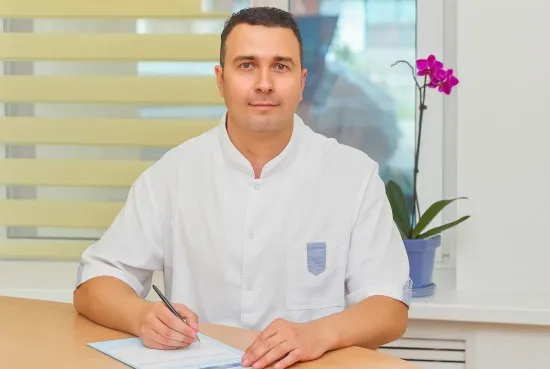


Urolithiasis is one of those diagnoses that patients often underestimate until the first serious episode. As long as the stone “stays quiet,” it may seem like an incidental ultrasound finding or something you can simply live with. But in real urology practice, it looks very different: today it may be only a dull ache in the lower back, and tomorrow – an attack of renal colic, high fever, an obstructed kidney and emergency hospitalization.
That is why I always explain one simple thing to my patients: urolithiasis is not only about the stone. It is about metabolic disturbances, urine composition, urinary tract anatomy, a tendency to recur and, most importantly, the risk of eventually facing a situation where waiting is no longer an option.
In real clinical practice, stones can be very different. Sometimes it is a small calculus found incidentally that can be safely observed. And sometimes these are large or staghorn stones that cause almost no symptoms for months, yet gradually damage the kidney. In my own practice, I have seen patients whose significant problem was long disguised as “periodic back pain,” and that false sense of calm turned out to be the most dangerous part.
Why Urolithiasis Develops and What Most Often Triggers the Process
To be honest, urolithiasis almost never has a single cause. This is not a situation where you can say, “the stone formed only because of water” or “only because of salt.” In most cases, the disease develops at the intersection of several factors: metabolic features, hydration habits, diet, infections, urinary tract anatomy and hereditary predisposition.
That is exactly why two patients with similar complaints may have completely different disease logic. One may have a tendency toward concentrated urine due to chronic dehydration and excess salt. Another may have a recurrent infection. A third may have a metabolic background in which crystals form faster than the body can keep them dissolved.
What I Most Commonly See in Clinical Practice
- insufficient fluid intake during the day
- excessive intake of salt and animal protein
- recurrent urinary tract infections
- metabolic disorders
- a sedentary lifestyle
- hereditary predisposition
At its core, a stone begins to form when the urine becomes too “saturated” with salts and the conditions for crystallization become favorable. First these are microcrystals, then “sand,” and later a calculus. At this stage, the person often feels nothing yet.
Why There Is No Single Universal Cause
Urolithiasis is a multifactorial disease. In some patients, metabolic mechanisms truly dominate: increased excretion of calcium, oxalates or uric acid, or changes in urine acidity. In others, infection, anatomical features or impaired urinary drainage become the main factor. In real practice, it is most often a combination of factors rather than a single “culprit.”
That is why I am always cautious about overly simple explanations like “the stone grew because of bad water” or “because of one product.” The disease is almost always more complex, and if you do not understand its logic in a particular patient, recurrence is very likely.
Which Factors Truly Increase the Risk
There are patterns that repeat again and again in urology practice. Chronic dehydration is one of the most underestimated causes. A person may not consider themselves someone who “drinks too little,” yet in reality spend most of the day in a state of concentrated urine. The second common issue is excess salt and animal protein combined with an inadequate hydration routine. The third is infections that sustain inflammation and change the environment within the urinary tract.
Add to this heredity, episodes of impaired urine outflow, anatomical features and certain metabolic disorders – and it becomes clear why urolithiasis so often returns if the only step taken is removal of the stone that has already formed.
How Urolithiasis Presents in Real Practice
One of the main mistakes patients make is expecting urolithiasis to always present in the same way. In reality, it does not. Sometimes a person lives for years with a dull ache in the lower back and attributes it to the spine. Sometimes a stone is found incidentally on ultrasound. And sometimes the first encounter with the disease is classic renal colic, when the person cannot find any position that relieves the pain.
Pulling or Intermittent Pain in the Lower Back
Not every case of urolithiasis begins with colic. Quite often, everything looks much more “calm”: periodic heaviness, dull lower back pain, discomfort after physical exertion, jolting, a long drive or an active day. These are exactly the kinds of symptoms that patients most often ignore for months.
Large stones, especially those in the renal pelvis or in a staghorn process, often behave in exactly this way: they do not always cause a dramatic acute attack, but they gradually create a chronic problem. And that is their danger. Sometimes a “silent” stone is more dangerous than vivid colic, because at least colic forces a person to seek urgent care.
Renal Colic – A Scenario Patients Remember for a Long Time
If a stone begins to migrate and blocks urine outflow, the picture changes abruptly. Renal colic develops – one of the most intense pain syndromes a person can encounter at all. The pain may begin suddenly, intensify in waves, radiate to the groin and genitals, and be accompanied by nausea, vomiting, false urges to urinate and marked restlessness. The patient tosses and turns, changes position, but finds no relief.
In clinical practice, this is a very recognizable picture. But it is important to understand: colic itself is not a diagnosis. It is a signal that urine outflow is impaired and that it is urgently necessary to determine how safe the situation is for the kidney.
For a detailed explanation of the symptoms and first aid in such an attack, read the article Renal Colic.
Other Symptoms That Should Not Be Considered “Secondary”
In addition to pain, urolithiasis may be accompanied by nausea, vomiting, blood in the urine, frequent urination, false urges, a feeling of incomplete emptying, low-grade fever and weakness. Against the background of severe pain, a reflex intestinal reaction often appears as well – bloating, delayed passage of gas and a sensation resembling an “acute abdomen.”
I want to emphasize separately: blood in the urine, fever, chills, repeated vomiting and reduced urine output are no longer just “unpleasant additions.” These are signs that may indicate a complication, a superimposed infection or significant impairment of outflow. In such a situation, delay is not acceptable.
How Urolithiasis Is Confirmed and What the Urologist Evaluates
Patients often think that diagnostic testing in urolithiasis is needed only to “see the stone.” In reality, the physician’s task is broader. It is important not only to confirm the presence of a calculus, but also to understand where it is located, how much it is impairing urine outflow, whether inflammation is present, how the kidney is doing, and whether the situation can be observed safely or whether it is already time to act more actively.
That is why, in good urology practice, diagnostics are not a random set of examinations, but an answer to a specific clinical question: how dangerous is this situation today, and what should the next step be.
First – Clinical Logic, Not Technology for Its Own Sake
At the first stage, it is important for the physician to hear the medical history correctly. When did the pain begin, how does it behave, have there been attacks before, is there fever, blood in the urine, repeated vomiting, how has urination changed, have there been episodes of spontaneous passage of stones, and is there already known urolithiasis in the medical history.
Very often, the complaints alone already make it clear whether this is a calm situation that can be managed in a planned way, or a scenario in which obstruction and infection must be ruled out quickly.
Tests Are Not Ordered “Just for Show”
Blood and urine tests in urolithiasis are important not by themselves, but as part of the overall picture. They help reveal signs of inflammation, blood in the urine, possible infection, changes in urine acidity and indirect signs of strain on the kidney. Sometimes it is exactly the laboratory findings that move a patient from the category of “safe to observe” into the category of “waiting is already dangerous.”
Ultrasound, X-Ray and CT – Not Competitors, but Tools Chosen for the Task
To visualize a stone, the physician may use ultrasound, radiographic methods or computed tomography. Which tool is needed depends on the clinical situation. Sometimes ultrasound and a basic assessment are enough. Sometimes, without more precise imaging, it is impossible to understand the level of obstruction, the true size of the stone or the safest management strategy.
From a practical standpoint, the physician needs to answer several key questions: where the stone is located, how large it is, whether urine outflow is impaired, whether there is dilation of the upper urinary tract and whether the situation poses a risk to kidney function.
When the Evaluation Needs to Be Broader
If stones recur, if the process is bilateral, if there is infection, large calculi, marked metabolic abnormalities or suspicion of a complex form of disease, the diagnostic workup naturally becomes broader. In such cases, the goal is no longer only to resolve the current problem, but also to understand why it developed and how to reduce the likelihood of recurrence.
Why I Always Ask Patients to Keep a Passed Stone
If a stone passes on its own or is removed, its composition should be analyzed whenever possible. To the patient, this may seem like an “extra formality,” but for the urologist it is often one of the most useful pieces of the puzzle. The same diagnosis – urolithiasis – can hide different stone formation mechanisms. That means prevention without stone composition analysis often ends up being too general and less precise.
Why Stones Should Never Be Ignored
One of the most dangerous illusions in urolithiasis sounds like this: “If it doesn’t hurt right now, everything must be fine.” In urology, that is very unreliable logic. A stone may temporarily stop causing symptoms, yet still remain in place, shift, injure the mucosa, sustain inflammation or gradually impair kidney function.
That is why I always tell patients: it is not enough just to survive the attack or wait until the pain settles. It is important to understand what is happening with urine outflow and how safe the situation is for the kidney over the coming days and weeks.
Impaired Urine Outflow – The Main Thing That Must Not Be Underestimated
When a stone blocks the lumen of the ureter or significantly interferes with urine passage, pressure in the upper urinary tract begins to rise. For the patient, this may present as pain, attacks of colic, a sensation of pressure or fullness, and sometimes even reduced urine output. For the kidney, it means strain, swelling, impaired microcirculation and a risk of tissue damage.
The longer the obstruction persists, the worse the prognosis. That is exactly why the question “can we wait a little longer” in urology is never decided by the patient’s preference, but by objective signs of safety.
Infection in the Presence of a Stone – A Different Level of Risk
A stone by itself is already a problem. An infection by itself is already a problem. A stone plus infection in the setting of impaired urine outflow is a potentially dangerous situation. When fever, chills, weakness and worsening general condition are added to obstruction, this is no longer simply about pain – it may already represent an inflammatory complication that can progress quickly.
That is why I always regard the combination of a stone, fever and signs of impaired outflow as a reason for urgent evaluation, not for home experiments and not for hoping to “sleep through it until morning.”
The Most Dangerous Patients Are Not Always the “Loudest” Ones
There is a paradox that patients do not always understand right away: a very dramatic attack at least forces a person to see a doctor. But large or long-standing stones can remain relatively quiet for a long time. The person gets used to the discomfort, postpones evaluation, and in exactly these cases, significant impairment of kidney function is sometimes discovered only later.
So, the absence of severe pain is not a guarantee of safety. Sometimes it is simply a slower and more deceptive disease scenario.
When Waiting Is Already Dangerous
Not every stone requires immediate intervention. This is important to understand. But endless waiting is also a poor strategy. If pain persists or recurs, if fever appears, weakness increases, urine output decreases, blood in the urine becomes more pronounced, laboratory results worsen, or the stone does not change position within the expected timeframe, the situation is no longer appropriate for passive observation.
In urology, success is often determined not only by the right treatment, but also by choosing the right moment when we stop waiting.
How to Reduce the Risk of Recurrent Stone Formation
One of the most common mistakes after treatment is to assume that if the stone passed or was removed, the story is over. In reality, for the urologist, that is only half the task. Removing the stone that has already formed is important. But if we do not understand why it appeared, the disease has every chance of returning.
That is why I always explain to patients: urolithiasis is not only about stone removal. It is also about recurrence prevention. And sometimes what matters more than the procedure itself is what the person does afterward.
Hydration – The Most Underestimated Measure
If we are talking about basic prevention, the first thing I start with is not pills, but water. Chronically concentrated urine creates ideal conditions for salt crystallization. That is why adequate hydration is not a “generic internet tip,” but one of the most practical and truly effective measures.
Of course, this does not mean everyone should mechanically drink the exact same volume. But the principle is simple: the urine should not remain constantly concentrated. For the patient, this matters far more than any attempt to “treat stones with folk remedies.”
Diet Matters, but There Is No Universal “Stone Diet”
The second mistake is looking for one universal nutrition plan. In practice, there is no such thing. Yes, excess salt, excessive animal protein and significant dietary imbalances can truly increase the risk of recurrence. But dietary prevention should take into account not only the general diagnosis, but also the stone composition, metabolic background, laboratory data and the patient’s clinical history.
That is why I am always cautious about rigid lists of “foods you must never eat.” Sometimes they create more confusion than benefit. It is better not to search for a mythical perfect diet for everyone, but to tailor recommendations to the specific type of stone formation.
Why Stone Composition Changes the Strategy
The same diagnosis can hide stones formed through very different mechanisms. That is exactly why stone composition is not a formality, but a practical guide. If there is an opportunity to analyze a passed or removed stone, it should be used. Without that, prevention often remains too general and therefore less effective.
After Treatment, Patients Should Not “Disappear” from Follow-Up
A very common scenario: the pain is gone, the stone passed or was removed, the patient exhales in relief and disappears. Then, some time later, they return with a new episode. After urolithiasis, it is important not only to eliminate the current stone, but also to complete follow-up: reassess tests, repeat imaging if needed, discuss metabolic factors, and adjust hydration and nutrition.
This is exactly the stage patients most often underestimate, even though it is one of the main factors that determines whether the disease will recur.
When a General Tip Is Not Enough and an Individual Plan Is Needed
If stones recur, if they are large, if there is infection, bilateral disease, metabolic abnormalities or a complex history, prevention should not be limited to the phrase “drink more water.” In such cases, an individualized follow-up and metaphylaxis plan is needed, based on real data rather than general advice.
What the Patient Really Needs to Remember
In practical terms, prevention begins with very simple things: do not live in a state of chronic dehydration, do not ignore recurrent pain, do not assume the problem is solved just because the acute episode is over, and do not postpone follow-up after the stone passes or is removed. In urolithiasis, recurrence is almost always easier to prevent than to go through pain, urgent diagnostics and treatment all over again.
Common Questions About Urolithiasis
Can Urolithiasis Go Away on Its Own?
To be precise, the disease itself does not simply “go away.” A specific small stone may pass spontaneously. But that does not cancel the diagnosis itself, and it does not answer the question of why that stone formed in the first place. So even if the calculus passes without intervention, the story does not end there – it is still necessary to understand how safe the situation is now and how to reduce the risk of recurrence.
Is Surgery Always Needed for Urolithiasis?
No. And this is important. Not every stone requires surgery or active removal. In some cases, observation, conservative management and controlled waiting for spontaneous passage are possible. But the decision depends not only on stone size, but also on its location, its impact on urine outflow, the severity of pain, the presence of infection and the overall clinical context.
How Can You Tell That a Stone Has Started to Pass?
Most often, this presents as a pain attack – renal colic. The pain may radiate to the groin, be accompanied by more frequent urination, nausea and sometimes blood in the urine. But it is important to understand: the start of stone movement is not always “good news.” Yes, sometimes it is the path toward spontaneous passage. But sometimes this is exactly when obstruction and the risk of complications develop. That is why typical renal colic requires not only hope for luck, but also medical evaluation.
Can Urolithiasis Be Treated Without Stone Fragmentation?
Yes, in some cases it can. Small stones may sometimes pass on their own, and some patients are indeed managed without active intervention. But this should never turn into uncontrolled waiting. Observation is acceptable only when the physician understands that the situation is safe for the kidney and there are no signs of a complicated course.
What Stone Size Is Considered Dangerous?
This is one of the most common questions, and there is no honest universal answer in millimeters. Danger is determined not only by size, but also by location. A small stone in the ureter can cause a very severe clinical picture, while a larger stone in the kidney may behave more quietly for some time. That is why I always assess not just the number in the ultrasound or CT report, but how that stone affects urine outflow, symptoms and kidney function.
What Should You Do If a Stone Is Found Incidentally and Nothing Hurts?
Do not panic, but do not ignore it either. An incidentally discovered stone is not always a reason for immediate intervention, but it is definitely a reason for a proper urological assessment. It is important to understand where it is located, whether it is growing, whether it is impairing urine outflow, whether there is a risk of complications and which strategy to choose – observation or treatment. The most common mistake in this situation is to relax simply because “nothing hurts.”
Can Recurrent Stone Formation Be Prevented?
It is impossible to guarantee completely that recurrence will never happen. But the risk can be significantly reduced. For that, hydration, dietary adjustment, understanding the stone composition, control of metabolic factors and follow-up after treatment all matter. Put simply: prevention works best when it is not generic, but based on the logic of your specific disease.
What the Patient Should Understand
Urolithiasis very often looks to the patient like a series of separate episodes: it hurts today, it settles tomorrow; one stone passed – so everything must be over. In real urology, that is usually not the case. The stone is only the visible part of the problem. Behind it there are often metabolic factors, hydration habits, infections, urinary tract anatomy or a combination of several factors at once.
That is why a competent approach to urolithiasis is always broader than simply “remove the stone.” It is important to understand how safe the situation is for the kidney right now, whether obstruction has been missed, whether there is infection, whether observation is acceptable, and what needs to change after treatment so the same story does not repeat itself a few months or years later.
To put it very simply: in urolithiasis, it is dangerous not only to endure the pain. It is dangerous to calm down too early. Sometimes the riskiest patient is not the one who arrives with dramatic renal colic, but the one who lives for a long time with “tolerable” symptoms and postpones evaluation while the kidney gradually loses time.
So the main takeaway for the patient is this: even if the acute episode is already over, that is not a reason to consider the problem closed. In urolithiasis, the right decision about what to do next is often more important than the initial relief itself.


Clinical Guidelines and Sources
- European Association of Urology (EAU). EAU Guidelines on Urolithiasis – latest edition.
- American Urological Association (AUA). Medical Management of Kidney Stones – Guideline.
- National Institute for Health and Care Excellence (NICE). Renal and Ureteric Stones – Assessment and Management.
- Türk C. et al. EAU Guidelines on Diagnosis and Conservative Management of Urolithiasis. European Urology.
- Skolarikos A. et al. Metabolic Evaluation and Recurrence Prevention for Urinary Stone Disease. European Urology.
- Preminger G.M. et al. AUA Guideline on the Management of Staghorn Calculi and Related Stone Disease Topics. Journal of Urology.
- UpToDate. Nephrolithiasis in Adults – Pathogenesis, Clinical Features, Evaluation, and Prevention of Recurrence.